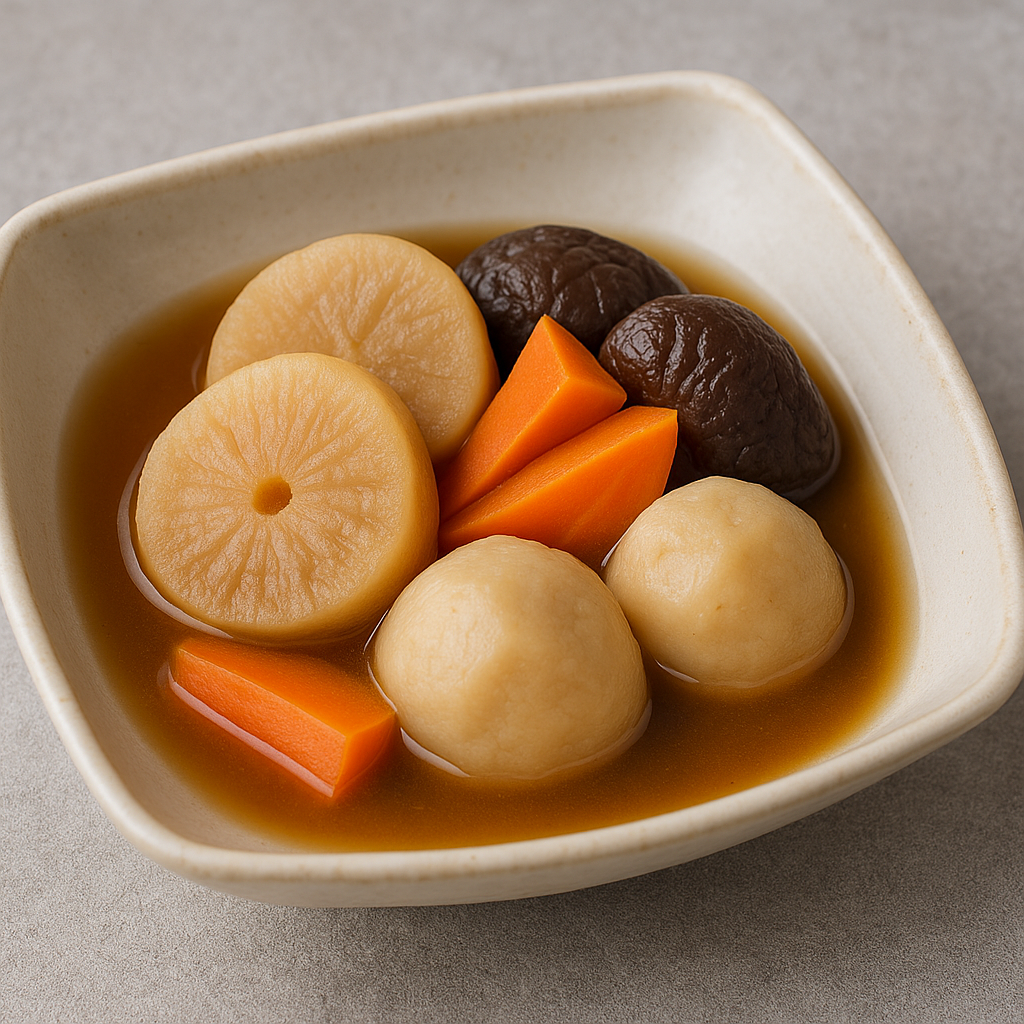
へそ大根のにしめの特徴
干し大根ならではの凝縮したうま味と心地よい歯ごたえ
へそ大根は輪切り大根を寒風と日差しで干して作る保存食で、中心の穴が“へそ”のように見えることから名付けられました。戻すと弾力が少しある噛み心地と濃い大根の甘みがよみがえり、煮しめにするとだしをたっぷり含んで深い味わいに仕上がります。
干し椎茸の戻し汁でコク深く、常備菜にも最適
干し椎茸の戻し汁をだしに合わせ、しょうゆ・みりんでじんわり煮含めます。こんにゃくや油揚げを合わせると香りとうま味の層が広がり、作り置きや正月料理にも重宝します。
へそ大根のにしめ レシピ
材料(2〜3人分)
- へそ大根(乾燥) … 60g(戻し後 約180g)
- 干し椎茸 … 4枚(戻し汁はこして取っておく)
- にんじん … 80g
- だし … 300ml
- 干し椎茸の戻し汁 … 150ml(足りなければ水で補う)
- しょうゆ … 大さじ2と1/2
- みりん … 大さじ2
- 砂糖 … 大さじ1〜1と1/2
- 酒 … 大さじ1
- (お好みで)鶏もも肉 … 100g
- (お好みで)里芋 … 2個
- 下処理用:塩・熱湯 … 適量
作り方
- へそ大根はたっぷりの水で戻し、軽くもみ洗いして水気を切る。鍋で1〜2分下ゆでし、ざるに上げる。
- 干し椎茸は冷水で戻し、軸を外して食べやすく切る(戻し汁はペーパーでこす)。
- にんじんは乱切り、油揚げは熱湯をかけて油抜きし短冊に切る。
- (鶏肉を使う場合)鍋に少量の油を熱し、ひと口大に切った鶏肉を軽く色づくまで炒める。
- 鍋にだし・椎茸の戻し汁・酒・みりん・砂糖・しょうゆを入れて煮立て、へそ大根・椎茸・にんじん(と炒めた鶏肉)を加える。
- 落とし蓋をして中火で12〜15分煮る。油揚げを加え、煮汁を時々かけながらさらに5〜7分、汁気がうっすら残る程度まで煮含める。
- 火を止めて5〜10分おき、余熱で味を含ませてから器に盛る。
シェフのワンポイントアドバイス
- へそ大根は戻す→軽く下ゆででクセを抑え、だしの含みを良くします。
- 椎茸の戻し汁は必ずこして使用すると、雑味が出ず澄んだコクになります。
- 煮汁が多い場合は最後に落とし蓋を外して軽く煮詰め、照りを出します。
- 作りたてより一晩置くと味がなじみ、いっそうおいしくなります。
栄養価(1人分の目安)
- エネルギー … 約180kcal(鶏肉なしの場合)
- たんぱく質 … 約8g
- 脂質 … 約5g
- 炭水化物 … 約27g
- 食塩相当量 … 約2.3g
- 特徴成分 … 食物繊維・カリウム・うま味成分(グアニル酸)を含みます
歴史
冬の保存食を生かす煮しめ
寒風で干した大根は保存性が高く、だしを含みやすいことから煮しめや煮物に用いられてきました。正月や行事の一品としても親しまれます。
山間部の暮らしが育んだ知恵
乾物化して備える習慣から生まれ、戻して煮含めることで季節を問わず大根の味を楽しめる家庭料理として受け継がれています。
家庭ごとの多彩な組み合わせ
こんにゃくや油揚げ、鶏肉などの具や甘辛の加減は家ごとに個性があり、土地のだし文化を映した味わいが広がります。
English Version
Features of Heso Daikon no Nishime
Concentrated umami and a pleasantly springy bite
Heso daikon is a preserved food made by sun- and wind-drying daikon rounds—its center hole resembles a “navel.” Once rehydrated, the daikon regains a firm, lightly springy texture and deep sweetness. Simmering it “nishime”-style lets the pieces soak up broth for a profoundly savory finish.
Depth from dried-shiitake soaking liquid—great for make-ahead
Blend the strained shiitake soaking liquid with dashi, then season gently with soy sauce and mirin. Carrot and abura-age add layers of aroma and umami, and the dish keeps well as a side or New Year fare.
Recipe – Heso Daikon no Nishime
Ingredients (Serves 2–3)
- Dried heso daikon … 60 g (about 180 g after soaking)
- Dried shiitake … 4 caps (reserve and strain the soaking liquid)
- Carrot … 80 g
- Abura-age (fried tofu) … 1/2 piece
- Dashi … 300 ml
- Shiitake soaking liquid … 150 ml (top up with water if needed)
- Soy sauce … 2 1/2 Tbsp
- Mirin … 2 Tbsp
- Sugar … 1–1 1/2 Tbsp
- Sake … 1 Tbsp
- (Optional) Chicken thigh … 100 g
- For prep: salt, boiling water … as needed
Directions
- Soak the heso daikon in plenty of water until pliable. Rub-rinse, drain, then parboil 1–2 minutes and drain again.
- Rehydrate shiitake in cold water; remove stems and slice. Strain the soaking liquid through paper or a fine filter and reserve.
- Cut carrot into chunks. Pour boiling water over abura-age to degrease, then cut into strips.
- (If using chicken) Warm a little oil and lightly sauté bite-size pieces until just colored.
- In a pot, bring dashi, shiitake liquid, sake, mirin, sugar, and soy sauce to a simmer. Add heso daikon, shiitake, carrot (and sautéed chicken, if using).
- Cover with a drop-lid and simmer over medium heat 12–15 minutes. Add abura-age and simmer 5–7 minutes more, basting occasionally, until a thin glaze of broth remains.
- Turn off the heat and rest 5–10 minutes to let flavors settle, then plate.
Chef’s Tips
- For the best texture, soak then briefly parboil the dried daikon to remove harshness and improve broth absorption.
- Always strain the shiitake soaking liquid to keep the flavor clean and clear.
- If there’s too much liquid at the end, remove the drop-lid and gently reduce to a glossy finish.
- The flavor improves after resting—overnight is even better.
Nutrition (per serving, approx.)
- Energy … ~180 kcal (without chicken)
- Protein … ~8 g
- Fat … ~5 g
- Carbohydrates … ~27 g
- Salt equivalent … ~2.3 g
- Notable nutrients … dietary fiber, potassium, umami nucleotides (guanylate)
History
Making the most of winter preserves
Dried daikon stores well and absorbs broth beautifully, so it has long been used in nishime and simmered dishes—also appearing on New Year tables.
Wisdom shaped by climate and daily life
Drying daikon during the cold season ensured year-round availability. Rehydrating and simmering keeps the flavor of daikon on the menu regardless of season.
Household variations
Choices of ingredients (abura-age, chicken, etc.) and the sweet–savory balance vary by household, reflecting local dashi culture and family taste.
何でも質問してください!